1. Product Principles and Structural Features of Alumina
1.1 Crystallographic Phases and Surface Attributes
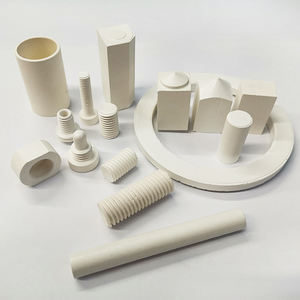
(Alumina Ceramic Chemical Catalyst Supports)

Alumina (Al ₂ O ₃), specifically in its α-phase kind, is among one of the most extensively utilized ceramic products for chemical stimulant supports because of its excellent thermal stability, mechanical strength, and tunable surface area chemistry.
It exists in numerous polymorphic kinds, consisting of γ, δ, θ, and α-alumina, with γ-alumina being one of the most usual for catalytic applications as a result of its high certain surface area (100– 300 m TWO/ g )and permeable framework.
Upon home heating over 1000 ° C, metastable change aluminas (e.g., γ, δ) progressively transform into the thermodynamically steady α-alumina (diamond structure), which has a denser, non-porous crystalline latticework and significantly reduced surface (~ 10 m TWO/ g), making it less ideal for active catalytic dispersion.
The high surface of γ-alumina emerges from its faulty spinel-like framework, which has cation jobs and permits the anchoring of steel nanoparticles and ionic types.
Surface hydroxyl groups (– OH) on alumina work as Brønsted acid sites, while coordinatively unsaturated Al FOUR ⁺ ions function as Lewis acid websites, making it possible for the material to get involved directly in acid-catalyzed responses or support anionic intermediates.
These innate surface area buildings make alumina not merely a passive provider but an active contributor to catalytic systems in several commercial processes.
1.2 Porosity, Morphology, and Mechanical Integrity
The performance of alumina as a driver support depends critically on its pore framework, which regulates mass transport, access of energetic sites, and resistance to fouling.
Alumina supports are crafted with controlled pore size distributions– ranging from mesoporous (2– 50 nm) to macroporous (> 50 nm)– to stabilize high area with reliable diffusion of reactants and items.
High porosity enhances diffusion of catalytically active metals such as platinum, palladium, nickel, or cobalt, stopping load and optimizing the variety of energetic websites each volume.
Mechanically, alumina exhibits high compressive strength and attrition resistance, vital for fixed-bed and fluidized-bed reactors where catalyst bits undergo long term mechanical tension and thermal biking.
Its reduced thermal expansion coefficient and high melting factor (~ 2072 ° C )ensure dimensional security under extreme operating conditions, including raised temperature levels and destructive atmospheres.
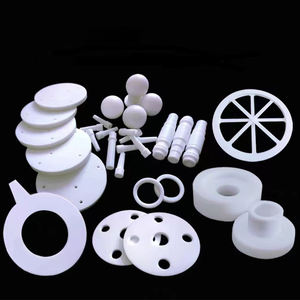
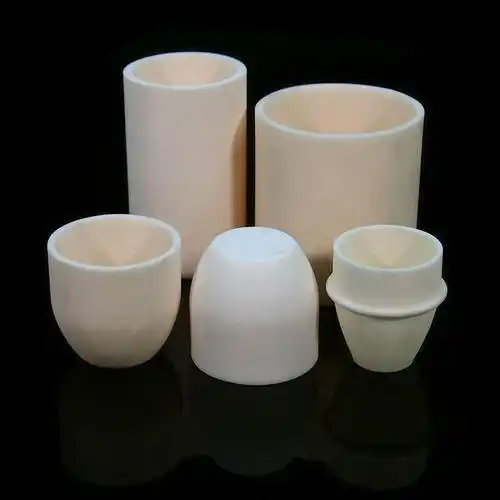
( Alumina Ceramic Chemical Catalyst Supports)
Additionally, alumina can be fabricated right into different geometries– pellets, extrudates, pillars, or foams– to optimize stress drop, warm transfer, and reactor throughput in large-scale chemical design systems.
2. Function and Mechanisms in Heterogeneous Catalysis
2.1 Active Steel Diffusion and Stabilization
One of the main functions of alumina in catalysis is to work as a high-surface-area scaffold for distributing nanoscale metal particles that act as active facilities for chemical improvements.
Via strategies such as impregnation, co-precipitation, or deposition-precipitation, honorable or change steels are uniformly distributed throughout the alumina surface area, creating extremely spread nanoparticles with sizes frequently listed below 10 nm.
The solid metal-support interaction (SMSI) in between alumina and metal particles improves thermal stability and prevents sintering– the coalescence of nanoparticles at heats– which would otherwise lower catalytic activity in time.
For instance, in petroleum refining, platinum nanoparticles sustained on γ-alumina are vital parts of catalytic reforming stimulants utilized to generate high-octane fuel.
Likewise, in hydrogenation responses, nickel or palladium on alumina assists in the enhancement of hydrogen to unsaturated natural substances, with the assistance protecting against bit movement and deactivation.
2.2 Advertising and Modifying Catalytic Activity
Alumina does not just work as a passive system; it proactively affects the digital and chemical actions of sustained metals.
The acidic surface area of γ-alumina can promote bifunctional catalysis, where acid websites catalyze isomerization, breaking, or dehydration steps while metal sites take care of hydrogenation or dehydrogenation, as seen in hydrocracking and reforming processes.
Surface hydroxyl groups can join spillover sensations, where hydrogen atoms dissociated on metal sites move onto the alumina surface area, expanding the zone of sensitivity beyond the steel bit itself.
In addition, alumina can be doped with elements such as chlorine, fluorine, or lanthanum to customize its acidity, boost thermal security, or enhance steel dispersion, tailoring the assistance for specific reaction settings.
These adjustments permit fine-tuning of driver efficiency in terms of selectivity, conversion performance, and resistance to poisoning by sulfur or coke deposition.
3. Industrial Applications and Refine Assimilation
3.1 Petrochemical and Refining Processes
Alumina-supported stimulants are indispensable in the oil and gas market, specifically in catalytic breaking, hydrodesulfurization (HDS), and heavy steam changing.
In liquid catalytic breaking (FCC), although zeolites are the primary active phase, alumina is typically integrated right into the catalyst matrix to enhance mechanical stamina and offer second breaking websites.
For HDS, cobalt-molybdenum or nickel-molybdenum sulfides are supported on alumina to eliminate sulfur from crude oil portions, assisting meet environmental policies on sulfur web content in gas.
In heavy steam methane reforming (SMR), nickel on alumina drivers convert methane and water right into syngas (H ₂ + CARBON MONOXIDE), a crucial step in hydrogen and ammonia production, where the support’s stability under high-temperature heavy steam is crucial.
3.2 Ecological and Energy-Related Catalysis
Beyond refining, alumina-supported stimulants play essential functions in exhaust control and clean power innovations.
In auto catalytic converters, alumina washcoats function as the primary support for platinum-group metals (Pt, Pd, Rh) that oxidize carbon monoxide and hydrocarbons and reduce NOₓ exhausts.
The high area of γ-alumina makes the most of direct exposure of rare-earth elements, lowering the needed loading and total expense.
In discerning catalytic reduction (SCR) of NOₓ making use of ammonia, vanadia-titania drivers are commonly supported on alumina-based substrates to enhance durability and diffusion.
In addition, alumina supports are being explored in arising applications such as CO two hydrogenation to methanol and water-gas change responses, where their security under reducing conditions is advantageous.
4. Challenges and Future Development Instructions
4.1 Thermal Security and Sintering Resistance
A major restriction of conventional γ-alumina is its phase improvement to α-alumina at high temperatures, bring about devastating loss of area and pore structure.
This restricts its usage in exothermic reactions or regenerative processes entailing periodic high-temperature oxidation to remove coke deposits.
Research study focuses on supporting the transition aluminas via doping with lanthanum, silicon, or barium, which prevent crystal growth and delay phase makeover approximately 1100– 1200 ° C.
Another strategy includes creating composite supports, such as alumina-zirconia or alumina-ceria, to incorporate high area with boosted thermal durability.
4.2 Poisoning Resistance and Regrowth Capability
Stimulant deactivation due to poisoning by sulfur, phosphorus, or heavy metals remains an obstacle in industrial procedures.
Alumina’s surface can adsorb sulfur substances, blocking energetic sites or reacting with sustained steels to develop non-active sulfides.
Developing sulfur-tolerant solutions, such as using basic marketers or protective coatings, is important for prolonging catalyst life in sour settings.
Equally vital is the capability to regrow invested drivers through regulated oxidation or chemical washing, where alumina’s chemical inertness and mechanical robustness permit numerous regrowth cycles without structural collapse.
Finally, alumina ceramic stands as a foundation product in heterogeneous catalysis, integrating structural toughness with functional surface area chemistry.
Its function as a stimulant assistance extends far past easy immobilization, actively influencing response pathways, improving metal diffusion, and making it possible for large industrial procedures.
Continuous innovations in nanostructuring, doping, and composite layout continue to increase its capacities in lasting chemistry and power conversion modern technologies.
5. Distributor
Alumina Technology Co., Ltd focus on the research and development, production and sales of aluminum oxide powder, aluminum oxide products, aluminum oxide crucible, etc., serving the electronics, ceramics, chemical and other industries. Since its establishment in 2005, the company has been committed to providing customers with the best products and services. If you are looking for high quality alumina technology, please feel free to contact us. (nanotrun@yahoo.com)
Tags: Alumina Ceramic Chemical Catalyst Supports, alumina, alumina oxide
All articles and pictures are from the Internet. If there are any copyright issues, please contact us in time to delete.
Inquiry us