1. Product Fundamentals and Crystallographic Quality
1.1 Phase Make-up and Polymorphic Actions
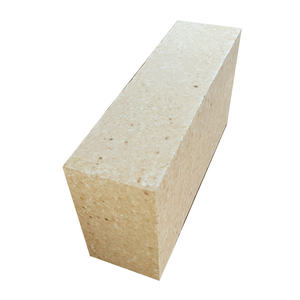
(Alumina Ceramic Blocks)
Alumina (Al ₂ O SIX), particularly in its α-phase form, is one of one of the most commonly used technical ceramics as a result of its outstanding balance of mechanical toughness, chemical inertness, and thermal security.
While light weight aluminum oxide exists in numerous metastable phases (γ, δ, θ, κ), α-alumina is the thermodynamically stable crystalline structure at high temperatures, identified by a thick hexagonal close-packed (HCP) plan of oxygen ions with light weight aluminum cations inhabiting two-thirds of the octahedral interstitial sites.
This bought framework, referred to as diamond, confers high lattice energy and solid ionic-covalent bonding, leading to a melting point of approximately 2054 ° C and resistance to phase makeover under extreme thermal problems.
The change from transitional aluminas to α-Al two O four usually occurs over 1100 ° C and is accompanied by significant volume contraction and loss of surface area, making stage control important throughout sintering.
High-purity α-alumina blocks (> 99.5% Al ₂ O TWO) exhibit exceptional efficiency in severe atmospheres, while lower-grade structures (90– 95%) may consist of second phases such as mullite or glazed grain boundary phases for affordable applications.
1.2 Microstructure and Mechanical Integrity
The efficiency of alumina ceramic blocks is exceptionally affected by microstructural attributes including grain dimension, porosity, and grain boundary communication.
Fine-grained microstructures (grain size < 5 µm) generally supply higher flexural stamina (up to 400 MPa) and boosted crack sturdiness compared to grainy counterparts, as smaller grains hinder crack proliferation.
Porosity, even at reduced degrees (1– 5%), substantially lowers mechanical toughness and thermal conductivity, necessitating full densification with pressure-assisted sintering approaches such as hot pressing or warm isostatic pushing (HIP).
Ingredients like MgO are usually presented in trace quantities (≈ 0.1 wt%) to prevent abnormal grain growth during sintering, making sure consistent microstructure and dimensional stability.
The resulting ceramic blocks display high solidity (≈ 1800 HV), outstanding wear resistance, and low creep prices at elevated temperature levels, making them appropriate for load-bearing and abrasive settings.

2. Manufacturing and Processing Techniques
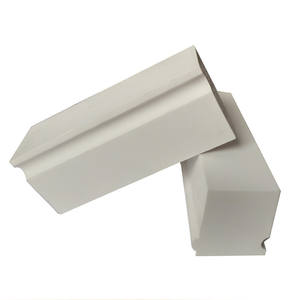
( Alumina Ceramic Blocks)
2.1 Powder Preparation and Shaping Techniques
The production of alumina ceramic blocks begins with high-purity alumina powders derived from calcined bauxite through the Bayer process or synthesized through rainfall or sol-gel courses for greater purity.
Powders are crushed to attain narrow bit dimension circulation, boosting packing thickness and sinterability.
Shaping into near-net geometries is completed through different forming strategies: uniaxial pushing for easy blocks, isostatic pressing for uniform density in intricate forms, extrusion for lengthy areas, and slide casting for complex or big elements.
Each method influences green body density and homogeneity, which straight effect last properties after sintering.
For high-performance applications, progressed creating such as tape spreading or gel-casting may be used to attain premium dimensional control and microstructural harmony.
2.2 Sintering and Post-Processing
Sintering in air at temperatures between 1600 ° C and 1750 ° C enables diffusion-driven densification, where particle necks expand and pores diminish, resulting in a totally dense ceramic body.
Ambience control and specific thermal accounts are important to prevent bloating, bending, or differential shrinking.
Post-sintering operations consist of diamond grinding, lapping, and brightening to accomplish tight tolerances and smooth surface area finishes required in sealing, gliding, or optical applications.
Laser cutting and waterjet machining enable accurate customization of block geometry without generating thermal stress and anxiety.
Surface area therapies such as alumina finishing or plasma spraying can even more boost wear or deterioration resistance in specific solution conditions.
3. Practical Characteristics and Performance Metrics
3.1 Thermal and Electric Habits
Alumina ceramic blocks display moderate thermal conductivity (20– 35 W/(m · K)), dramatically higher than polymers and glasses, allowing reliable warmth dissipation in digital and thermal administration systems.
They keep architectural integrity up to 1600 ° C in oxidizing ambiences, with reduced thermal development (≈ 8 ppm/K), adding to excellent thermal shock resistance when effectively created.
Their high electrical resistivity (> 10 ¹⁴ Ω · centimeters) and dielectric toughness (> 15 kV/mm) make them suitable electrical insulators in high-voltage settings, including power transmission, switchgear, and vacuum systems.
Dielectric constant (εᵣ ≈ 9– 10) continues to be secure over a wide regularity array, supporting usage in RF and microwave applications.
These residential or commercial properties enable alumina blocks to work accurately in atmospheres where natural products would certainly degrade or stop working.
3.2 Chemical and Environmental Longevity
One of the most useful characteristics of alumina blocks is their exceptional resistance to chemical assault.
They are very inert to acids (other than hydrofluoric and warm phosphoric acids), alkalis (with some solubility in solid caustics at raised temperature levels), and molten salts, making them ideal for chemical processing, semiconductor manufacture, and pollution control devices.
Their non-wetting actions with several liquified metals and slags permits use in crucibles, thermocouple sheaths, and heating system linings.
In addition, alumina is safe, biocompatible, and radiation-resistant, increasing its utility into clinical implants, nuclear securing, and aerospace elements.
Minimal outgassing in vacuum atmospheres further certifies it for ultra-high vacuum cleaner (UHV) systems in study and semiconductor production.
4. Industrial Applications and Technical Integration
4.1 Structural and Wear-Resistant Components
Alumina ceramic blocks act as essential wear elements in industries varying from mining to paper manufacturing.
They are used as linings in chutes, receptacles, and cyclones to stand up to abrasion from slurries, powders, and granular products, considerably expanding service life compared to steel.
In mechanical seals and bearings, alumina obstructs give reduced rubbing, high solidity, and corrosion resistance, decreasing maintenance and downtime.
Custom-shaped blocks are incorporated into cutting devices, passes away, and nozzles where dimensional stability and side retention are critical.
Their light-weight nature (density ≈ 3.9 g/cm FIVE) additionally adds to power savings in moving parts.
4.2 Advanced Engineering and Emerging Makes Use Of
Past conventional duties, alumina blocks are increasingly used in sophisticated technological systems.
In electronics, they function as protecting substratums, warm sinks, and laser cavity elements as a result of their thermal and dielectric residential or commercial properties.
In power systems, they work as strong oxide gas cell (SOFC) elements, battery separators, and combination reactor plasma-facing products.
Additive manufacturing of alumina via binder jetting or stereolithography is emerging, allowing intricate geometries previously unattainable with conventional forming.
Crossbreed structures combining alumina with metals or polymers through brazing or co-firing are being established for multifunctional systems in aerospace and defense.
As material science advances, alumina ceramic blocks continue to develop from passive structural elements into energetic elements in high-performance, lasting design services.
In summary, alumina ceramic blocks stand for a foundational course of innovative porcelains, incorporating durable mechanical performance with phenomenal chemical and thermal stability.
Their flexibility across industrial, digital, and clinical domain names emphasizes their long-lasting value in modern design and technology advancement.
5. Provider
Alumina Technology Co., Ltd focus on the research and development, production and sales of aluminum oxide powder, aluminum oxide products, aluminum oxide crucible, etc., serving the electronics, ceramics, chemical and other industries. Since its establishment in 2005, the company has been committed to providing customers with the best products and services. If you are looking for high quality alumina technology, please feel free to contact us.
Tags: Alumina Ceramic Blocks, Alumina Ceramics, alumina
All articles and pictures are from the Internet. If there are any copyright issues, please contact us in time to delete.
Inquiry us