1. Product Principles and Microstructural Design
1.1 Composition and Crystallographic Security of Alumina
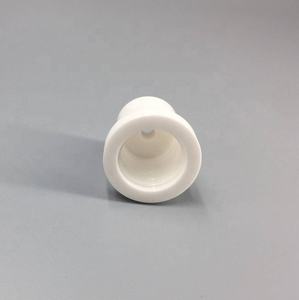
(Alumina Ceramic Nozzles)

Alumina (Al ₂ O TWO), particularly in its alpha phase, is a totally oxidized ceramic with a corundum-type hexagonal close-packed structure, offering remarkable thermal stability, chemical inertness, and mechanical stamina at elevated temperature levels.
High-purity alumina (normally 95– 99.9% Al Two O FIVE) is preferred for nozzle applications as a result of its very little impurity content, which decreases grain boundary weakening and boosts resistance to thermal and chemical degradation.
The microstructure, containing fine, equiaxed grains, is crafted during sintering to minimize porosity and take full advantage of density, straight affecting the nozzle’s disintegration resistance and structural stability under high-velocity fluid circulation.
Ingredients such as MgO are typically introduced in trace total up to inhibit irregular grain development during sintering, making certain a consistent microstructure that supports long-term dependability.
1.2 Mechanical and Thermal Features Relevant to Nozzle Efficiency
Alumina porcelains exhibit a Vickers hardness exceeding 1800 HV, making them extremely immune to abrasive wear from particulate-laden fluids, a critical attribute in applications such as sandblasting and abrasive waterjet cutting.
With a flexural strength of 300– 500 MPa and a compressive stamina over 2 Grade point average, alumina nozzles preserve dimensional stability under high-pressure procedure, typically ranging from 100 to 400 MPa in industrial systems.
Thermally, alumina keeps its mechanical residential properties approximately 1600 ° C, with a reduced thermal development coefficient (~ 8 × 10 ⁻⁶/ K) that gives superb resistance to thermal shock– crucial when revealed to rapid temperature level fluctuations during startup or shutdown cycles.
Its thermal conductivity (~ 30 W/m · K) is sufficient to dissipate localized heat without generating thermal gradients that might bring about fracturing, stabilizing insulation and warm management requirements.
2. Production Processes and Geometric Accuracy
2.1 Forming and Sintering Strategies for Nozzle Manufacture
The production of alumina ceramic nozzles begins with high-purity alumina powder, which is refined right into an environment-friendly body using methods such as cold isostatic pushing (CIP), shot molding, or extrusion, depending upon the wanted geometry and batch size.
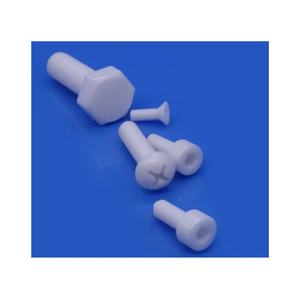
( Alumina Ceramic Nozzles)
Cold isostatic pressing uses uniform pressure from all directions, yielding an uniform thickness distribution vital for decreasing problems during sintering.
Shot molding is utilized for intricate nozzle forms with inner tapers and fine orifices, permitting high dimensional accuracy and reproducibility in mass production.
After forming, the green compacts undergo a two-stage thermal treatment: debinding to remove natural binders and sintering at temperatures in between 1500 ° C and 1650 ° C to achieve near-theoretical density via solid-state diffusion.
Specific control of sintering atmosphere and heating/cooling rates is important to prevent warping, fracturing, or grain coarsening that might compromise nozzle performance.
2.2 Machining, Polishing, and Quality Control
Post-sintering, alumina nozzles frequently call for accuracy machining to accomplish limited tolerances, especially in the orifice region where flow characteristics are most conscious surface area finish and geometry.
Diamond grinding and lapping are used to improve internal and exterior surface areas, attaining surface area roughness worths listed below 0.1 µm, which decreases flow resistance and protects against particle accumulation.
The orifice, generally varying from 0.3 to 3.0 mm in diameter, should be without micro-cracks and chamfers to guarantee laminar circulation and consistent spray patterns.
Non-destructive screening techniques such as optical microscopy, X-ray evaluation, and pressure biking examinations are utilized to verify architectural honesty and performance consistency prior to implementation.
Personalized geometries, consisting of convergent-divergent (de Laval) accounts for supersonic circulation or multi-hole arrays for follower spray patterns, are significantly fabricated making use of sophisticated tooling and computer-aided design (CAD)-driven manufacturing.
3. Practical Advantages Over Alternate Nozzle Products
3.1 Superior Disintegration and Corrosion Resistance
Compared to metallic (e.g., tungsten carbide, stainless-steel) or polymer nozzles, alumina exhibits much greater resistance to abrasive wear, especially in settings entailing silica sand, garnet, or various other tough abrasives utilized in surface preparation and cutting.
Steel nozzles deteriorate swiftly because of micro-fracturing and plastic contortion, requiring frequent substitute, whereas alumina nozzles can last 3– 5 times longer, substantially lowering downtime and operational expenses.
In addition, alumina is inert to a lot of acids, antacid, and solvents, making it appropriate for chemical splashing, etching, and cleansing processes where metal elements would certainly wear away or contaminate the liquid.
This chemical stability is especially valuable in semiconductor production, pharmaceutical handling, and food-grade applications needing high pureness.
3.2 Thermal and Electrical Insulation Residence
Alumina’s high electrical resistivity (> 10 ¹⁴ Ω · centimeters) makes it optimal for usage in electrostatic spray layer systems, where it avoids charge leakage and ensures uniform paint atomization.
Its thermal insulation ability permits safe operation in high-temperature splashing environments, such as flame spraying or thermal cleaning, without warmth transfer to bordering components.
Unlike steels, alumina does not catalyze undesirable chain reaction in reactive fluid streams, maintaining the honesty of delicate formulas.
4. Industrial Applications and Technical Effect
4.1 Roles in Abrasive Jet Machining and Surface Area Therapy
Alumina ceramic nozzles are important in unpleasant blasting systems for corrosion removal, paint removing, and surface area texturing in vehicle, aerospace, and building industries.
Their ability to maintain a constant orifice size over extended usage makes sure uniform abrasive velocity and effect angle, directly influencing surface area coating high quality and procedure repeatability.
In abrasive waterjet cutting, alumina focusing tubes guide the high-pressure water-abrasive mix, holding up against abrasive pressures that would quickly break down softer materials.
4.2 Usage in Additive Production, Spray Coating, and Fluid Control
In thermal spray systems, such as plasma and flame spraying, alumina nozzles straight high-temperature gas flows and liquified particles onto substrates, benefiting from their thermal shock resistance and dimensional security.
They are also used in precision spray nozzles for farming chemicals, inkjet systems, and gas atomization, where wear resistance makes certain lasting application accuracy.
In 3D printing, especially in binder jetting and material extrusion, alumina nozzles provide great powders or thick pastes with very little obstructing or use.
Emerging applications consist of microfluidic systems and lab-on-a-chip gadgets, where miniaturized alumina elements use resilience and biocompatibility.
In summary, alumina ceramic nozzles represent a crucial crossway of products scientific research and commercial design.
Their extraordinary combination of solidity, thermal security, and chemical resistance makes it possible for trustworthy performance in some of the most requiring fluid handling atmospheres.
As industrial procedures push toward greater stress, finer resistances, and much longer service periods, alumina porcelains continue to set the standard for durable, high-precision flow control elements.
5. Vendor
Alumina Technology Co., Ltd focus on the research and development, production and sales of aluminum oxide powder, aluminum oxide products, aluminum oxide crucible, etc., serving the electronics, ceramics, chemical and other industries. Since its establishment in 2005, the company has been committed to providing customers with the best products and services. If you are looking for high quality alumina technology, please feel free to contact us. (nanotrun@yahoo.com)
Tags: Alumina Ceramic Nozzles, Ceramic Nozzles, Alumina Nozzles
All articles and pictures are from the Internet. If there are any copyright issues, please contact us in time to delete.
Inquiry us